

Solutions
- TOP
- Solutions
- Case Studies
- OPC UA x MCP Adapter for AI Agent
-
- Water supply case
- User Configurable Driver Function
- Eliminating Data Loss with OPC UA Historical Access
- External Configuration Function
- Sparkplug B Client Support
- OPC UA Information Model Support
- OPC UA x MCP Adapter for AI Agent
- Exploring the Potential of OPC UA Historical Access and Information Models
OPC UA x MCP Adapter for AI Agent

In recent years, generative AI and AI agent technologies have advanced rapidly, raising expectations for their practical application in the manufacturing industry. Interest in leveraging AI for on-site improvement, such as equipment data analysis, anomaly detection, maintenance support, knowledge retention, and the transfer of expertise from skilled workers, is steadily increasing. As a result, how to effectively integrate shop-floor equipment with AI is becoming an increasingly critical issue.
However, manufacturing sites often involve equipment from multiple vendors, each with different communication specifications and data structures. This creates a fundamental challenge even before AI implementation: how to collect data from different equipment and organize the data into a usable format.
Against this backdrop, Takebishi’s OPC server, DeviceXPlorer OPC Server, which already offers a wide range of device connectivity supporting more than 400 types of devices from over 100 manufacturers, has added support for the OPC UA Information Model in the latest version. This enhancement enables equipment data to be handled not merely as raw values but as meaningful, structured information, significantly improving interoperability with AI agents.
This article introduces how the OPC UA Information Model can be used to structure equipment data and explores the potential of integrating AI agents to drive digital transformation (DX) in manufacturing environments.
1. Challenges of Introducing AI in the Manufacturing Industry
There are many challenges on the shop floor. These factors are driving the need for greater efficiency, automation, and effective utilization of on-site extertise.
Challenges Faced in Manufacturing Sites
- Labor shortages and an aging skilled workforce
- Difficulty in transferring technical expertise
- Increasing demands for quality and productivity improvement
- Intensifying global competition
In this context, generative AI and AI agent technologies have advanced rapidly in recent years and are beginning to reach practical application. In the manufacturing sector, expectations are rising for their use in equipment data analysis, anomaly detection, maintenance support, and operator assistance. However, AI implementation also presents several challenges:
Challenges in AI Implementation
- Need for specialized knowledge in AI and data analytics
- Converting on-site know‑how, tacit knowledge, and explicit knowledge into data
- Building infrastructure to collect and utilize equipment data
- Shortage of personnel capable of driving AI initiatives
- System development and operational costs
In particular, manufacturing sites often contain equipment from multiple vendors, each with different communication specifications and data formats. As a result, even before AI implementation begins, the challenge of how to collect and integrate equipment data becomes a major barrier.
2. A New Approach to Connecting AI Agents
To address these challenges, our DeviceXPlorer OPC Server has long served as a foundational platform for connecting PLCs, various types of equipment, and sensors—regardless of manufacturer or communication protocol—to collect and manage data in a unified manner.
Furthermore, by leveraging the OPC UA Information Model, it becomes possible to handle not only raw values but also the contextual meaning behind the data. For example, data can be passed to AI in a more meaningful, structured form, such as:
- Data structures
- Methods (functions)
- State types (e.g., alarms, operating status)
- Attributes
- Relationships
We are also planning to provide an OPC UA × MCP Adapter, which bridges OPC UA with MCP (Model Context Protocol, a communication protocol designed for AI agents). With this adapter, AI agents that receive natural‑language instructions and operate based on conditions or external information will be able to directly access equipment data through OPC UA servers such as DeviceXPlorer OPC Server and DeviceGateway, an IoT gateway solution from Takebishi.
MCP serves as a standard interface that enables AI agents to safely interact with external tools and data.
Figure 1: The image of OPC UA x AI Adapter
With this adapter, the burden of data interpretation on the AI side is reduced, making it easier to perform analyses and provide support that are more closely aligned with real shop‑floor needs.
In the following sections, we present practical usage scenarios illustrating how AI agents can be effectively integrated into manufacturing operations.
3. Utilization Scenarios Enabled by AI Agent Integration
By integrating OPC servers with AI agents, a wide range of practical applications can be realized on the manufacturing floor.
Example Use Cases
- Automated collection of on‑site data
- Analysis of early signs of abnormalities
- Estimation of root causes of equipment issues
- Utilization and retention of operational knowledge
- Operator assistance
- Improving efficiency in maintenance work
For instance, operators can interact with AI agents using natural language, asking questions such as:
- “Which equipment experiences the most downtime?”
- “What is the cause of this alarm?”
- “Have there been past cases of similar abnormalities?”
The AI agent can then refer to equipment data and historical records to provide timely and relevant support.
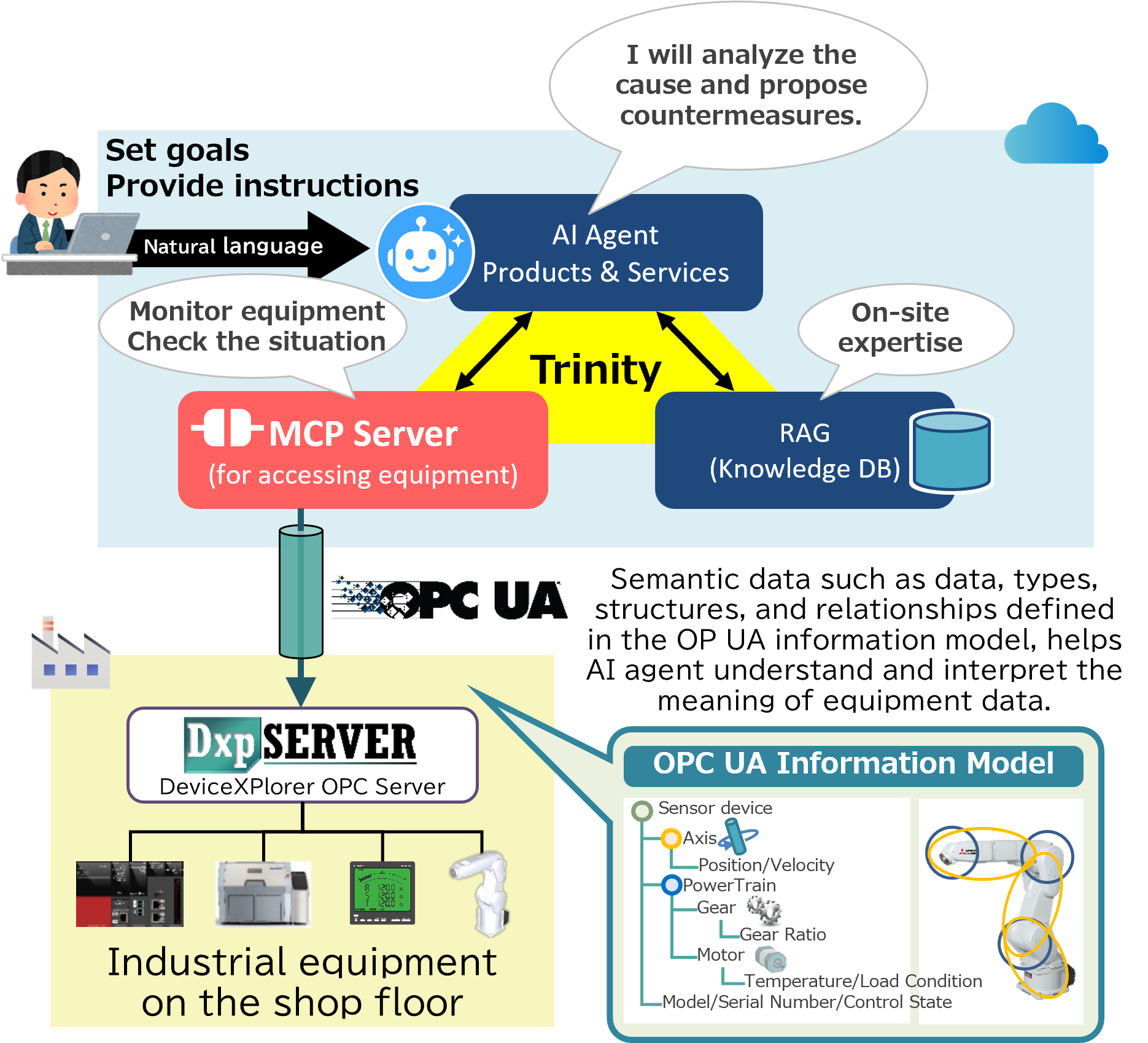
Figure 2: AI agent integration with equipment data
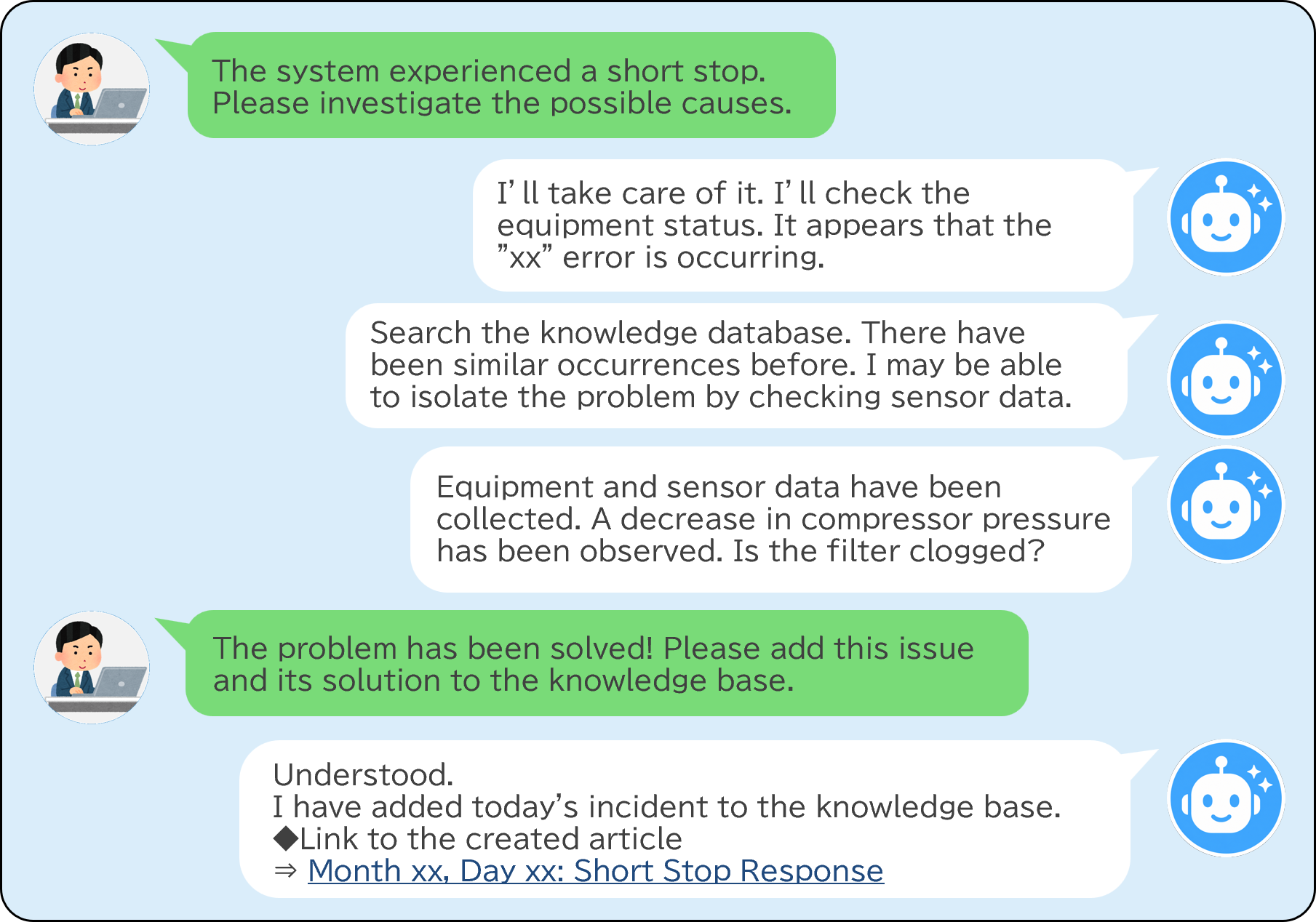
Figure 3: Give instructions through natural language
4. Establishing a Shop-Floor Data Foundation for AI Enablement
To put AI into practical use in manufacturing environments, it is essential not to rely on AI alone but to build a robust data foundation that connects shop‑floor equipment with AI systems.
By combining the device‑connectivity capabilities of an OPC server with the analytical and support functions of AI agents, it becomes possible to reduce the challenges associated with AI implementation and accelerate its deployment on the shop floor.
In particular, assigning semantic meaning to equipment data through the OPC UA Information Model is expected to further enhance interoperability with AI.
As AI adoption continues to accelerate within the manufacturing industry, DeviceXPlorer OPC Server will play an increasingly important role—not merely as a data collection platform, but as a “shop‑floor data foundation for the AI era.”